Reprinted with permission from Sephardim in the Americas: Studies in Culture and History (The University of Alabama Press).
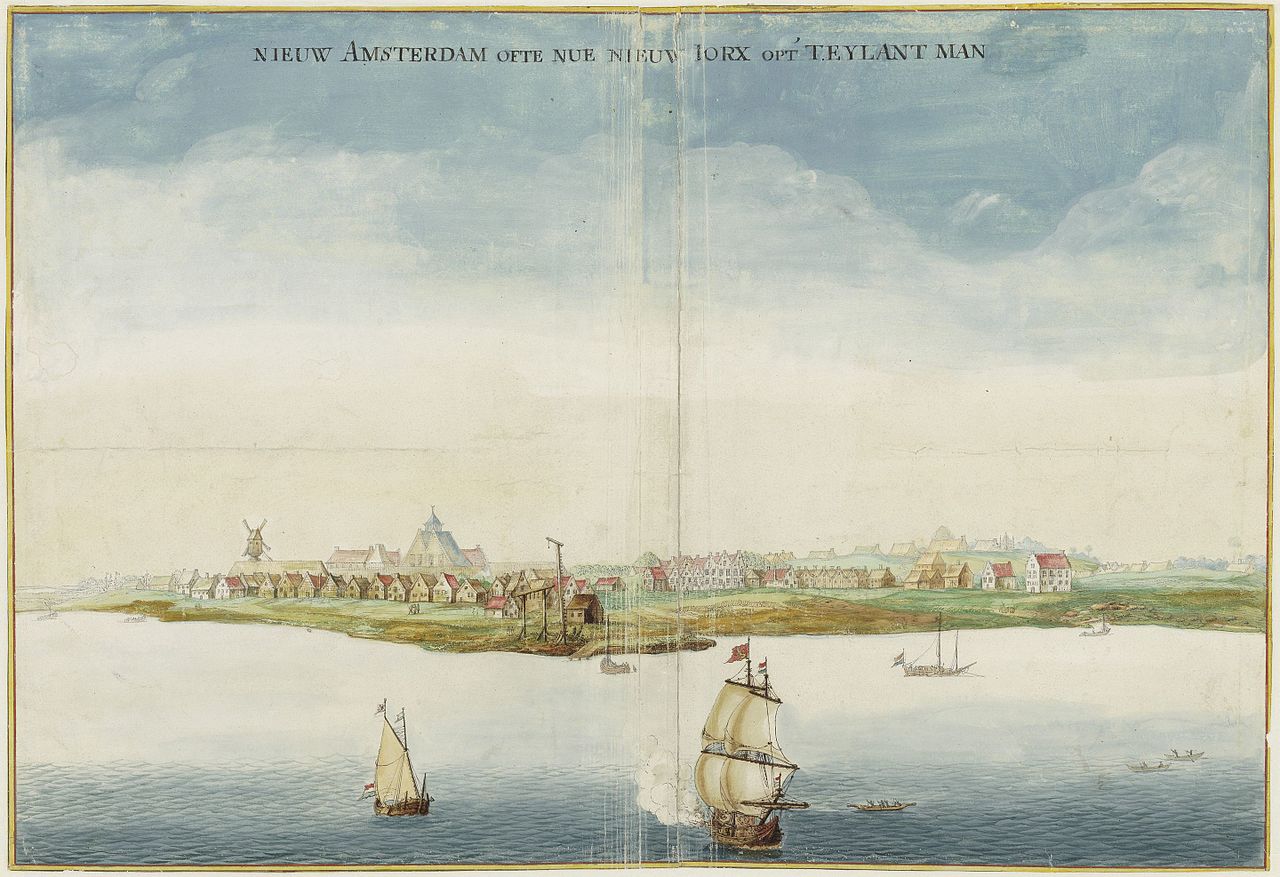
As is well known, the first Jewish settlement in what became the United States was in Dutch New Amsterdam. The generally accepted history is that in late August or early September of 1654, a French ship–called variously the St. Catherine or St. Charles–captained by Jacques de la Motthe, arrived in the harbor of New Amsterdam with a number of Dutch refugees, including 23 Jewish men, women, and children, presumably from Recife. The surviving documentary references have given rise to a number of theories regarding the route and circumstances that brought these pioneers to Peter Stuyvesant’s small village.
At least two Jews met the boat: Solomon Pieters or Petersen, who appears briefly in the Dutch records as advocate for the Jews in their first dealings with Stuyvesant; and Jacob Barsimson, an Ashkenazi trader who had just arrived in the colony. Captain de la Motthe sued his Jewish passengers for the promised fare, and when they were unable to meet his demands, two heads of family were imprisoned as hostages until funds to pay the debt could be obtained from relatives in Amsterdam.
Initial Hostility
Stuyvesant, who objected to any settlers who were not members of the Dutch Reformed Church, attempted to evict the Jews, but Jewish stockholders in Amsterdam prevailed on the Dutch West India Company to order the narrow-minded governor to let them remain. Possibly at the instigation of the Amsterdam Jewish community, six heads of Sephardic families, led by Abraham de Lucena, went to New Amsterdam as settlers in March 1655 to investigate its business potential. They brought a Torah scroll with them, an indication that a private synagogue was created.
With your help, My Jewish Learning can provide endless opportunities for learning, connection and discovery.
Stuyvesant, determined to drive the Jewish settlers out of New Amsterdam, made efforts to restrict their trade, prohibited their owning property, and taxed them to pay for the town watch. When Barsimson and Asser Levy the community butcher–both Ashkenazim–protested that they had “burgher” (i.e., citizenship) rights from Amsterdam and should be allowed to take their turn as guards on the town wall, Amsterdam ruled in their favor. In 1655, the Jews applied for a plot of land for a cemetery, but the governor denied the request, pointing out that no one had yet died. The following year the death of one of the Jews compelled him to designate “a little hook of land” beyond the town wall. This site has long since disappeared.
Stuyvesant’s recalcitrance and the extreme cold of New Amsterdam’s winters led the Sephardic Jews to depart for Amsterdam, London, or the Caribbean, where relatives were better established. By 1663, the Torah scroll had been returned to Amsterdam. In 1664 a large British fleet forced Stuyvesant to surrender without firing a shot, and all residents who remained in what was now New York were required to sign an oath of allegiance to the English crown.
The one Jewish name on the list was Asser Levy’s. He seems to have maintained the only Jewish presence of record in British New York until he was joined in 168o by relatives from Amsterdam. Levy’s death on February 1, 1681/82 and burial in the old cemetery unquestionably led Sephardi Joseph Bueno de Mesquita to purchase a separate burying ground for his own family and for a growing group of Sephardim in the community.
Creating a Synagogue
The earliest mention of Jewish worship dates to 1682, but public worship was proscribed until a decade later. A map from 1695 shows a rented synagogue location on Beaver Street; five years later the synagogue had moved to a house owned by John Harpendinck, shoemaker, on Mill Street. By 1728, probably inspired by the erection of a number of churches, the Jewish community purchased a plot adjacent to the Harpendinck house and built America’s first synagogue.
The papers of Nathan Simson, a former president of the congregation who moved back to England in 1722, show that in his day the Ashkenazim already outnumbered the Sephardim. The new synagogue, completed in 1730, set the tone for colonial American Jewry by continuing to use the Sephardic form of worship already in place since the arrival of its first lay reader, Saul Brown (né Pardo). Why? Because the community was too small to underwrite the building fund and relied heavily on donations from the wealthier Sephardic communities.
The incumbent hazzan [cantor], Moses Lopez da Fonseca, was the son of Curaçao’s rabbi. That community sent the most generous contribution to New York with the stipulation that even though New York was full of “Tedeschi” (Portuguese for “Germans”), the gift was predicated on New York’s using the Sephardic ritual. Although Nathan Simson had referred to the congregation as Shearith Jacob (“Remnant of Jacob”), its official title became Shearith Israel.
Another factor may have favored the maintenance of Sephardic custom: In the small town that New York was, Jews lived among non-Jews, and the latter found Jews and Jewish worship of some interest. Sephardic worship, led by a hazzan, must have been considered more dignified for non-Jewish observers than the unstructured babel that was Ashkenazic worship.
The congregation, recognizing that the Ashkenazim were more versed in halakhah (Jewish law), engaged them for such synagogue functions as shohet and bodek (kosher butcher and inspector), and mohel (circumciser). However, for the conduct of worship the New York congregation sought Sephardim who could chant in the Sephardic mode. They were greatly assisted by the appearance in 1761 of an English translation of the Sephardic prayerbook for the eve of the holidays, followed five years later by a more complete prayer-book for the year, both presumably the work of Isaac Pinto, an educated layman.
The Revolutionary War
Shearith Israel was often hard-pressed to find a qualified hazzan. Those it did obtain did not stay long. How the members must have welcomed in 1768 a native son reared in the congregation, Gershom Mendes Seixas! He served for 48 years, interrupted by the Revolutionary War. In August 1776, when it was apparent that George Washington was losing the Battle of Brooklyn Heights, Seixas gathered the synagogue’s scrolls and appurtenances in a wagon and joined other patriot congregants and his relatives from Newport, Rhode Island, in Connecticut.
The British remained in control of New York until the surrender in 1783. Those members of the community who had no other place to go kept the synagogue open, joined by an occasional Tory hazzan and by Jewish Hessian soldiers who opted to remain in New York when their contracts with the British army ended. The majority of New York’s Jews were either shopkeepers or international traders.
Following the Revolution, the scattered leaders of Shearith Israel returned. By this time, the congregation’s leaders were almost all Ashkenazic, but they were so accustomed to the Sephardic ritual that it has remained the minhag [custom]. Shearith Israel’s strict control of Jewish religious life in New York was all-pervasive. Every Jew who arrived in the community was required to affiliate and to contribute as his means permitted. The congregation was also the sole social-service agency, dispensing charity and caring for the aged, the sick, and the transient.
Following the Napoleonic Wars in Europe, there was a revival of immigration of Ashkenazic Jews. The newcomers asked permission to hold their own separate services under the aegis of Shearith Israel, but when their request was denied, they broke away and in 1825 organized B’nai Jeshurun, New York’s first Ashkenazic-rite congregation. By mid-century, Shearith Israel’s preeminence in New York’s Jewish communal affairs was gradually yielding to the far larger German immigrant community.
Ashkenazi
Pronounced: AHSH-ken-AH-zee, Origin: Hebrew, Jews of Central and Eastern European origin.
Sephardic
Pronounced: seh-FAR-dik, Origin: Hebrew, describing Jews descending from the Jews of Spain.
Torah
Pronunced: TORE-uh, Origin: Hebrew, the Five Books of Moses.