It is difficult to determine exactly when people started to recite Yiddish tehines…. The first tehineh to appear in print was one for a woman to say before immersion in the mikveh [ritual bath]. This tehineh, which was apparently translated from Hebrew, was included in Seyder Mitsves Nashim [loosely translated as “Guide to Women’s Rituals and Commandments] by Benjamin Aaron Selnik, published in Cracow in 1577.
Although few tehines from this time period have survived, Yiddish tehines must have already been a well-known form. In the introduction to his book Seyfer Shir ha-Shirim, published in Cracow in 1579, Isaac Sulkash discussed the issue of tehines and the language of prayer. He suggested that women recite tehines in Yiddish rather than in Hebrew so that they would understand what they were saying. Sulkash could not have made his suggestion unless a substantial body of tehines was already extant in Yiddish.
Early Publications
The first known edition of tehines that was printed as an entity unto itself was a bilingual (Hebrew and Yiddish) edition published in Prague, probably in 1590. Printed editions of Yiddish tehines became widespread in the 17th century. One such edition was published in 1666, apparently in Venice. By 1880 the bibliographer Benjacob noted that tehines for women were too numerous to count and list in a book.
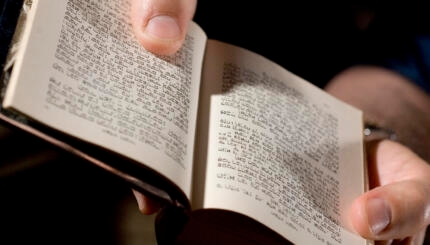
Benjacob’s terse comment, however, fails to give a complete explanation of this statement. One popular format for printing tehines was as small, pocket-size books. Many tehines were printed individually on single sheets of paper or in pamphlets of just a few pages, with no mention of the publisher or place and date of publication, thus making it almost impossible for a bibliographer to record them. Moreover, the diminutive nature of these items caused them to be fragile and easily lost or destroyed. Although problematic for bibliographers, these items were convenient for users since they contained one or two tehines for specific occasions. The proliferation of editions of tehines that Benjacob described attests to their popularity and indicates that tehines fulfilled certain needs.
With your help, My Jewish Learning can provide endless opportunities for learning, connection and discovery.
Pipeline to God
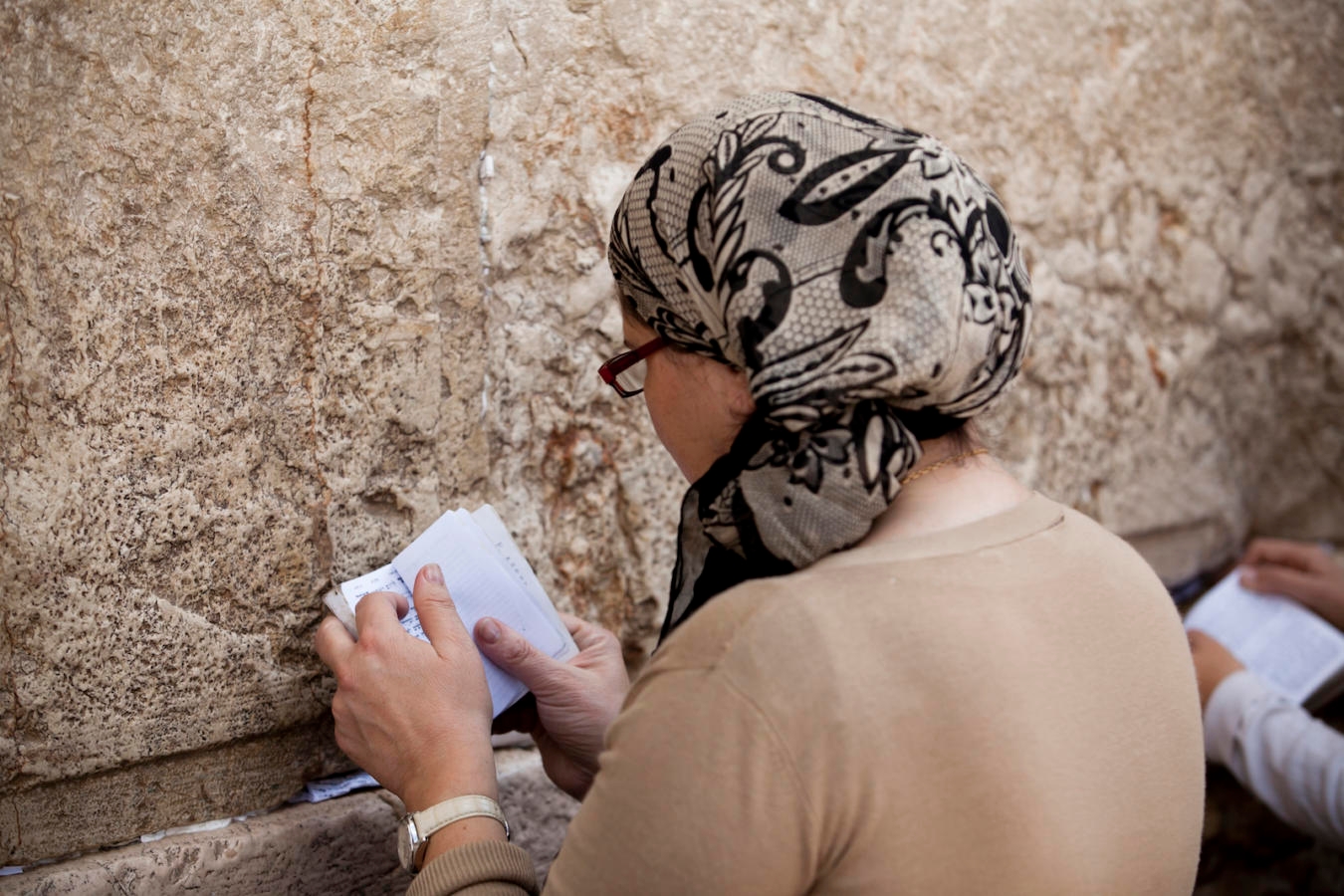
Tehines were a popular and powerful medium of communication. They offered women a direct pipeline to God. The tone of tehines is conversational, addressing God respectfully but as a Yiddish-speaking friend or neighbor who will listen in time of need. The subject matter of tehines is varied. There are tehines to suit every occasion in personal and religious life, which were really one in the eyes of the tehineh. Tehines could also be said in various locations: the kitchen, the home, the ritual bath, the synagogue, and the cemetery.
Some tehines include instructions advising that they be said along with certain prayers in the standard prayer service. There are also tehines for the days of the week, the months of the year, the various holidays and fast days, and the High Holy Days in particular. Some of the types of tehines mentioned above could be said in either the home or synagogue.
Other tehines were solely intended to be said in the synagogue, as indicated by the following kind of instructions that preceded the tehineh: “One should say this tehineh when the cantor says an’im zemires,” or “Another tehineh for a woman when she goes to synagogue after childbirth.” Many of those tehines whose instructions can only be carried out in the synagogue center around the holidays, such as tehines to be said when the shofar is blown, during Yizkor, or during the priestly blessing. This may indicate that there was a greater number of women in the synagogue during these special days.
A tehineh that mentions women in the synagogue is “Tehineh Mah Tovu.” Mah Tovu is the prayer that is recited upon entering the synagogue. The first sentence of the prayer is the following verse from Numbers 24:5: “How fair are your tents, 0 Jacob, Your dwellings, 0 Israel!” The explanation of the verse given by the tehineh is: “How good and dear are your tents, Jacob–these are the women’s sections [vaibershe shuln] where Jewish daughters gather to praise God; your resting places, Israel–these are the holy synagogues and houses of study where men go to study and pray.”
Home & Synagogue
A few tehines bridge the gap between women’s lives in the home and the synagogue. One of these is Sarah bas Tovim’s tehineh in Shloyshah She’orim (The Three Gates), which was recited on the eve of Yom Kippur when making memorial candles. Although the tehineh was not recited in synagogue, it posits a relationship between women and the synagogue and extends that relationship historically to the Temple in Jerusalem and possibly even to the Mishkan, the original mobile sanctuary in the desert, as is clear from the following passage from the tehineh:
“Let it be Your will that today, the eve of Yom Kippur, we will be remembered for good, since we bring the candles to the synagogue. Because of the commandment that we keep we should merit to give candles to the Holy Temple, as it was in the beginning, and the prayers that will be said near the candles should be with great piety and great awe….”
In contrast to this lofty realm, personal events and mundane concerns predominate in many tehines, such as tehines to be said when one’s husband is on a journey, on the occasion of a son’s circumcision, and in regard to making a living or baking challah.
As befits a women’s genre, tehines often focus on issues or events that are specific to women or traditionally associated with them. Many tehines revolve around pregnancy, childbirth, children, or childlessness. There are tehines for widows and agunot [women whose husbands disappeared or abandoned them without giving them a divorce]. Tehines for the Sabbath on which the new month is blessed–heralding the arrival of Rosh Hodesh, the semi-holiday that is particularly observed by women–were also popular.
“Hanah” Mitzvot
Numerous tehines were composed for the women’s mitzvot known as the Hanah mitzvot, an acronym for challah (tithing dough), niddah (laws of family purity), and hadlakat ha-ner (lighting candles). The acronym is a reminder of the heroic Jewish women who bore the name Hannah (Hanah in Hebrew)–Hannah and her seven sons of Hanukkah fame and the biblical Hannah, who serves as a model of prayer and whose very name is onomatopoetically reminiscent of and linguistically related to the word tehineh. Furthermore, a self-evident conclusion is that if a woman observes the hanah mitzvot scrupulously, as these great women of long ago did, she will be rewarded and blessed as they were.
Indeed, a significant characteristic of tehines is their frame of reference. In contrast to the standard prayer liturgy, which refers to the God of the Patriarchs, tehines invoke the merits of the Matriarchs or other biblical heroines as well as noted Jewish women to intercede on behalf of the petitioner.
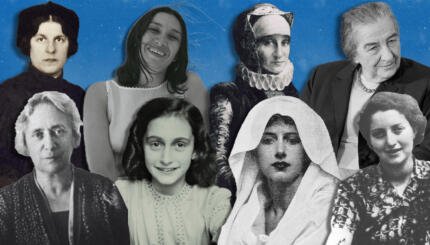
This sensitivity to women’s concerns indicates that tehines were truly women’s province, written not only for women, but sometimes by women. The best known of these women was Sarah bas Tovim, whose pamphlet Shloyshah She’orim, mentioned above, first appeared in the 18th century. Shloyshah She’orim means The Three Gates, which are the Hanah mitzvot, the blessing for the New Moon, and the High Holy Days, with particular emphasis on Yom Kippur. Sarah bas Tovim, however, was certainly not the only woman who composed tehines.…
Thus the genre of the tehineh formed a folk liturgy, which served as an adjunct to the canonized Hebrew prayer service that was resistant to change and not readily accessible to the majority of women. The world of the tehineh extended beyond the boundaries of the synagogue to encompass the home and daily life and to enrich them Tehines gave women a voice. They provided women with a vehicle by which to fulfill their spiritual needs and express their concerns in a concrete way. Tehines enabled women to imbue their daily tasks with meaning and infuse their traditional roles with religious significance. Reciting tehines let women know that they, too, were significant participants in the fabric of Jewish life.
Excerpted with permission from Daughters of the King: Women and the Synagogue, edited by Susan Grossman and Rivka Haut (Jewish Publication Society).
challah
Pronounced: KHAH-luh, Origin: Hebrew, ceremonial bread eaten on Shabbat and Jewish holidays.
Hanukkah
Pronounced: KHAH-nuh-kah, also ha-new-KAH, an eight-day festival commemorating the Maccabees' victory over the Greeks and subsequent rededication of the temple. Falls in the Hebrew month of Kislev, which usually corresponds with December.
mikveh
Pronounced: MICK-vuh, or mick-VAH, Alternate Spelling: mikvah, Origin: Hebrew, Jewish ritual bath.
shofar
Pronounced: sho-FAR or SHO-far, Origin: Hebrew, a ram’s horn that is sounded during the month of Elul, on Rosh Hashanah, and on Yom Kippur. It is mentioned numerous times in the Bible, in reference to its ceremonial use in the Temple and to its function as a signal-horn of war.
Yom Kippur
Pronounced: yohm KIPP-er, also yohm kee-PORE, Origin: Hebrew, The Day of Atonement, the holiest day on the Jewish calendar and, with Rosh Hashanah, one of the High Holidays.